
Greenland: A Land of Ice, Culture, and Transformation
Oct 04, 2025
Greenland: A Land of Ice, Culture, and Transformation
Greenland is the world’s largest island, and combines stark contrasts with immense beauty. With its vast ice sheets, colorful towns, and rich Inuit heritage, Greenland is a land where tradition meets modernity. However, beneath its stunning landscapes lies a complex story of colonization, cultural preservation, economic challenges, and aspirations for independence.
Our cruise began and ended in Kangerlussuaq, Greenland, and included numerous stops in this fascinating land. Even now, weeks after returning from this adventure, it’s hard to believe I was right there, in a place I had only visited via stories, photos, videos and maps. Join me as I explore Greenland in depth with this post, covering all the topics we learned on our recent Adventure Canada expedition cruise.

A Brief History of Greenland
Greenland’s history is deeply rooted in its Inuit heritage and its colonization by Denmark. The Inuit diaspora stretches across the Arctic, from Siberia to Labrador, and Greenland is home to a majority Inuit population. Colonization began in 1721 when Lutheran missionary Hans Egede arrived in the Nuuk area, marking the start of Danish influence.
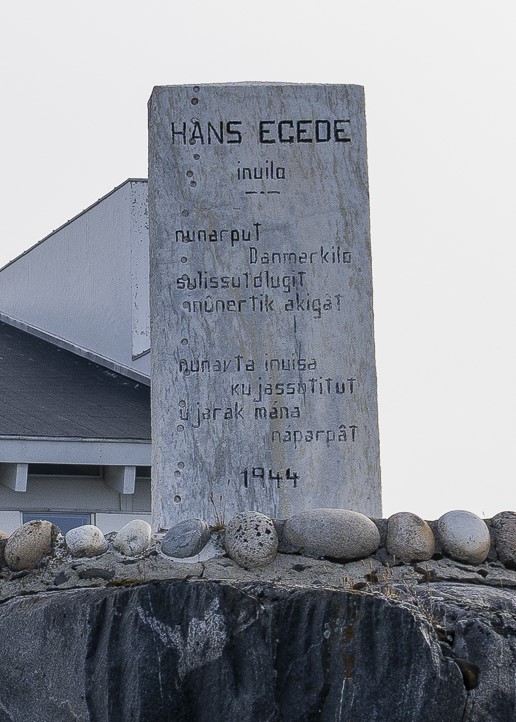
Greenland has gained increasing autonomy, with home rule established in 1979. This established the Greenlandic Parliament in Nuuk, while Denmark ceded control over areas such as education, health, fisheries and the environment.
Another referendum in 2008 brought Greenland further autonomy and self-rule, giving them control over the police, Coast Guard and courts, and made Kalaalisut, or Greenlandic, the official language. Denmark still retains authority over matters such as defense, foreign affairs, and monetary policy.
On the downside, the 2008 agreement also froze the annual subsidy that Greenland receives from Denmark. Since half the public budget comes from this subsidy, Greenland will have to find ways to stimulate the local economy to provide for any shortfall.
Despite these advancements, full independence remains a topic of debate. Greenland still relies heavily on Danish subsidies, which account for about half of its public budget. Achieving economic self-sufficiency is seen as a key step toward independence, but this remains a significant challenge.
Today, Greenland has a total population of around 57,000, with nearly 60% concentrated in its 4 largest cities. Nuuk has a population around 20,085. The next largest communities, Sisimiut, Ilulissat and Qaqortoq, have populations of approximately 5,526, 5,149 and 3,055 respectively as of July, 2025.
The People and Language
Greenland’s demographic is predominantly Inuit, with a significant Danish minority. While Kalaallisut is the official language, Danish and English are also widely spoken. Greenlandic is part of the Inuit language family, and while it shares similarities with Inuktitut spoken in Canada, regional dialects like East Greenlandic and North Greenlandic can differ significantly.
Identity is a complex issue in Greenland, particularly for those of mixed heritage. Some politicians have controversially suggested that only those with fully Greenlandic ancestry should be considered Greenlandic, sparking debates about identity and belonging. For many, being Greenlandic is a matter of personal feeling rather than ancestry.
Culture and Traditions
Greenlandic culture is a unique blend of Inuit traditions and Danish influences. Hunting, fishing, and storytelling are central to the Greenlandic way of life. From a young age, children are taught survival skills like handling knives and rifles, reflecting the historical need to adapt to the Arctic environment.
Greenlanders take their kayaking very seriously. Kayak culture is rooted in thousands of years of Inuit survival and hunting tradition, evolving into a symbol of cultural identity and national pride today. The traditional skin-on-frame kayak (qajaq) was a vital hunting tool, requiring immense skill, including mastering complex rolls for self-rescue and even offensive maneuvers. Modern efforts focus on preserving this rich heritage through clubs, training, and annual competitions, celebrating the craftsmanship and artistry of the qajaq and the essential skills developed by the Inuit people for survival in the Arctic environment. Greenland holds an annual National Kayak Championship to showcase their finely-honed skills and celebrate their heritage.

Greenlanders live in tight-knit communities where everyone knows each other. Celebrations like “kaffemik,” an open-house party with food and storytelling, highlight the importance of family and cultural continuity. Storytelling remains a cherished tradition, fostering connection across generations.
“We had a rule when I was a child. We had a boat…with an old Honda engine that was really heavy to pull. So they told us that once we learned how to turn the engine on ourselves, we were allowed to drive around as much as we wanted. So I tried for many, many years to turn that on, and never succeeded. My father was always watching me trying. And one day, I think it was in fourth grade, I turned it on, and I saw my father, he was dancing and singing!” – Nanna Frederiksen, Adventure Canada Inuit Cultural Educator
Christianity, introduced by Danish missionaries, coexists with Inuit spiritual beliefs. Greenlanders are enthusiastic churchgoers and maintain traditional burial customs, with gravesites reflecting a blend of indigenous and Christian practices.

Greenlanders have a deep connection to their land, viewing it as a shared resource rather than something to be owned. This philosophy is reflected in the fact that land ownership is not permitted in Greenland; people can own houses but not the land they stand on.
Greenland is known for its picturesque colorful buildings. We learned that this arose during the colonial era, when Denmark mandated a color-coded building system, designating specific colors for different buildings to make them easily identifiable. Red typically marked churches, schools, and stores; yellow was for hospitals; green for telecommunications; black for police stations; and blue for fish factories. The system provided a clear way to navigate settlements before street names and house numbers were common.
While this strict color-coding is no longer in use, the tradition of colorful buildings continues, with hospitals often remaining yellow as a nod to the past.

Education in Greenland
Education in Greenland is free, and students even receive financial support to pursue higher education. However, the education system faces significant challenges. Many schools lack quality resources, and most textbooks and teaching materials are in Danish, making it difficult for Greenlandic students to keep up. There are only four high schools in the entire country, located in Nuuk, Qaqortoq, Sisimiut, and Aasiaat, forcing many students to leave their hometowns for education.
Greenland has one university, Ilisimatusarfik, located in Nuuk, but it offers limited programs. Students often go to Denmark for higher education, though many face prejudice and homesickness. While some return to Greenland, others stay in Denmark due to better job opportunities and wages.
Youth and Aspirations
Greenlandic youth are at the forefront of cultural preservation and social change. Many young people are relearning traditional practices, such as Inuit tattoos, language revitalization, kayaking and storytelling, while also engaging in global issues like climate change and indigenous rights. The LGBTQ+ community is growing, with Pride events gaining popularity.
Youth in Greenland are exploring creative outlets like music, theater, and podcasting. Sisimiut hosts the Arctic Sound Festival, an international event where young musicians and storytellers come together to share their art. Additionally, young Greenlanders are increasingly active in politics, with many running for office and advocating for change.

Economy and Employment
The economy is heavily dependent on fishing – primarily for shrimp and halibut, which is a major economic driver.

Tourism is a growing industry, with visitors drawn to Greenland’s stunning landscapes and unique culture. However, the influx of large cruise ships has sparked debates about sustainable tourism. New regulations now require large ships to dock only in bigger settlements to prevent overwhelming smaller communities. Some communities, such as Ilulissat, now require ship operators to use local resources for excursions, such as boat tours.
Recent developments such as Nuuk’s new international airstrip facilitate increased tourism and global connectivity, potentially boosting Greenland’s economic autonomy.
Job opportunities in Greenland are often unequal, with Danish workers receiving better pay and benefits than local Greenlanders. This disparity has led to frustration among the local population. Despite this, many Greenlanders continue to work in traditional industries like hunting and fishing, often combining these with tourism-related activities such as guiding or hospitality.
An example of the inequality is that if a Dane and a Greenlandic person both apply for a job in Nuuk, for example, the Dane will get an apartment and will be compensated for their moving expenses. But the Greenlandic person, regardless of how far from Nuuk they live, will be considered “local” and not eligible for these benefits.
Globalization has also connected Greenland to the world like never before. Social media influencers, climate activists, and young entrepreneurs are putting Greenland on the global map, creating new opportunities for cultural exchange and economic growth.
Healthcare and Social Services
Greenland offers free healthcare to all residents, funded by taxes. While larger towns have hospitals, smaller settlements rely on traveling nurses and doctors. The healthcare system faces challenges, including a reliance on substitute workers from Denmark, who are often paid significantly more than local staff.
While healthcare is free and accessible, a mental health stigma persists. Cultural norms discourage openly discussing feelings or struggles, stemming from historical survival imperatives. Nevertheless, there is a strong tradition of mutual support, especially toward elders and vulnerable community members.
Climate and Environmental Concerns
Greenland is on the front lines of climate change, with its melting ice cap pouring into the oceans at the rate of 177 billion metric tonnes in 2023 alone, corresponding to nearly 340,000 tonnes per minute. While the melting ice cap exposes new opportunities for mineral exploration, this has also raised concerns about environmental sustainability. The government is exploring ways to balance economic development with environmental preservation. Ongoing mining operations produce gold and anthracite (coal).

Greenland and Nunavut: Inuit Connections Across Borders
Though Greenland and Nunavut face similar challenges, each has unique political and cultural dynamics. Greenland benefits from Danish support, whereas Nunavut is part of Canada with English as a dominant language. Cross-border collaboration is growing through university agreements, artistic exchanges, and political dialogue, reflecting a shared Inuit identity and aspirations.
The Trump Proposal and Greenland’s Future
U.S. President Donald Trump has made headlines by expressing interest in acquiring Greenland. This brought global attention to Greenland and sparked discussions about its strategic importance.
For Greenlanders, the proposal was met with a mix of amusement, concern and resolve. A recent survey revealed that only 6% of Greenlanders support the idea of joining the United States, underscoring the population’s preference for autonomy. This highlights Greenland’s strong cultural identity and its aspirations for independence rather than integration into another country. It is noteworthy that only a small minority of Americans support the idea of Greenland becoming part of the U.S.
“So wherever you are in Greenland, we are a small community. Everybody basically knows each other. We say hi to each other, when we meet in the grocery stores… It's really good because we have a really strong connection to each other. So, for example, when Trump was like, ‘we want to buy Greenland’, everybody got together quickly and was like, ‘no, we stand together’…
Young people have started to come forward in politics. A lot of young people have been elected in this year's elections. And I think Mr. Trump has something to do with it, because previously we were a very isolated country. Nobody really knew about us, and you could kind of not care about politics, and things would go like how they always go, and people didn't really feel like they had an impact. But when Donald Trump said that he wanted to buy Greenland, and… suddenly, the whole world had eyes on us. And I think that has encouraged a lot of young people to speak up. And we also have felt the impacts a lot with tourism, especially in Nuuk.” - Nanna Frederiksen, Adventure Canada Inuit Cultural Educator
The Path to Independence
While many Greenlanders aspire to full sovereignty, the country’s reliance on Danish subsidies and its small population present significant challenges. Achieving economic self-sufficiency, particularly by diversifying the economy beyond fishing, is seen as a prerequisite for independence.
While Greenland remains a self-governing territory within the Kingdom of Denmark, independence would make Greenland not only the first fully independent Inuit nation, but also the only independent majority indigenous population nation in the Northern Hemisphere.