Lancelot had a name because people knew him, and that is not a small thing.
The Salt River herd is one of the most closely documented free-roaming horse populations anywhere. Volunteers track individual animals, record which band each belongs to, note foals as they arrive and follow them as they mature. Horses acquire names, reputations and followings. People who have never been to Arizona can recognise particular stallions on sight.
That documentation is why a horse like this one could be protected at all. An anonymous herd is a management statistic; a herd of named individuals with photographs attached is a constituency. The public response that stopped the 2015 removal drew much of its force from the fact that so many people already knew these specific animals by name.
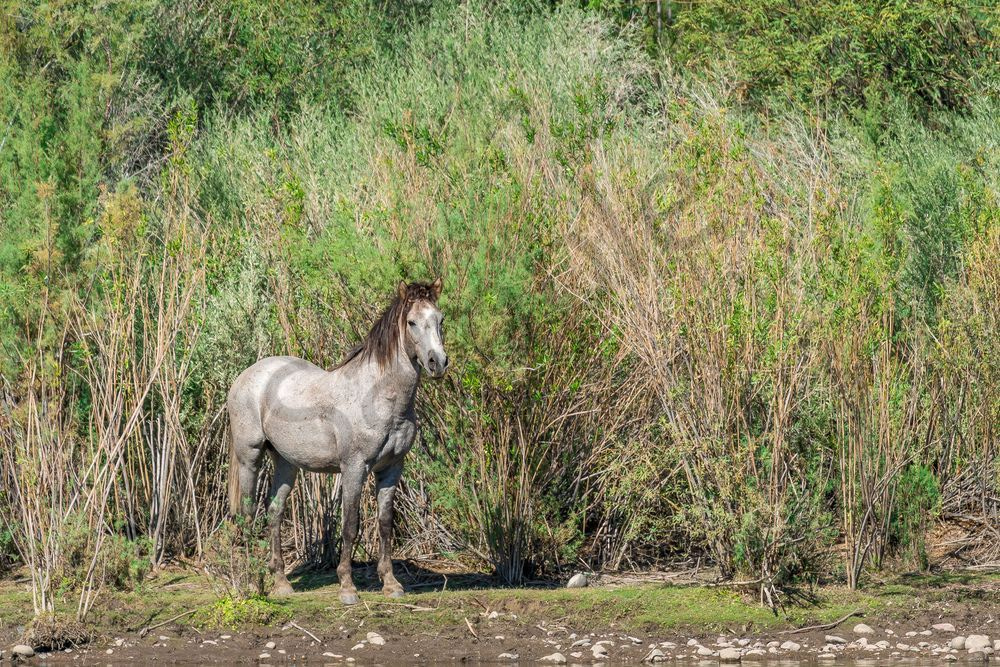
It also means the losses are felt. Lancelot was hit by a car and died at eight, which is young: a healthy band stallion can expect the better part of two decades. He was a favourite at the Lower Salt River for a grey-and-roan coat that didn't look like anything else in the herd, and the way he died is the risk that comes with a herd living alongside a road. Wild populations don't offer explanations. A horse is simply there through one season and not the next.
This photograph is the reason to bother. There is no record of a wild animal except the one someone took the trouble to make, and Lancelot is now entirely contained in the photographs people made while he was alive.