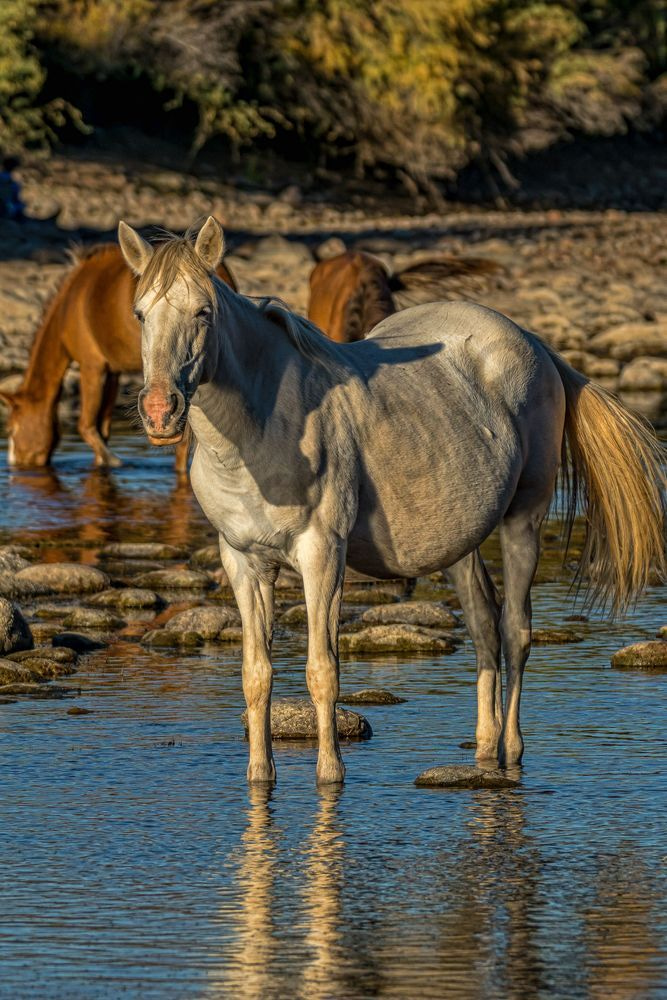
A white coat in low sun is one of the harder problems in wildlife photography, and it's the reason this frame works.
White horses are not born white. Grey horses are born dark, bay, black, chestnut, and lighten progressively over years as the coat greys out, which is why some of the Salt River horses turn white as they age. A pale mare in this herd is very often an old mare, and in a band the older mares are the ones the others follow to water.
Technically, she's a trap. White fur in direct golden-hour sun sits right at the top of the tonal range, and the highlights on her back will clip to featureless white a full stop before the rest of the scene is correctly exposed. You either expose for her and let the desert go dark, or expose for the scene and lose her. Late, low, warm light is what makes it survivable: the sun is weak enough and angled enough that the coat glows instead of blowing out, and you get the texture of the hair rather than a white shape.
The pause is worth noting too. A grazing horse that lifts its head is checking, and you have perhaps two seconds before it decides you're uninteresting and goes back to eating.
On printing this one: everything here depends on holding detail in the brightest part of the image. Pearl or metallic paper handles that better than glossy metal, which can drive near-white tones to paper-white and take the texture of her coat with it. This is the one image in this set where I'd choose paper first.