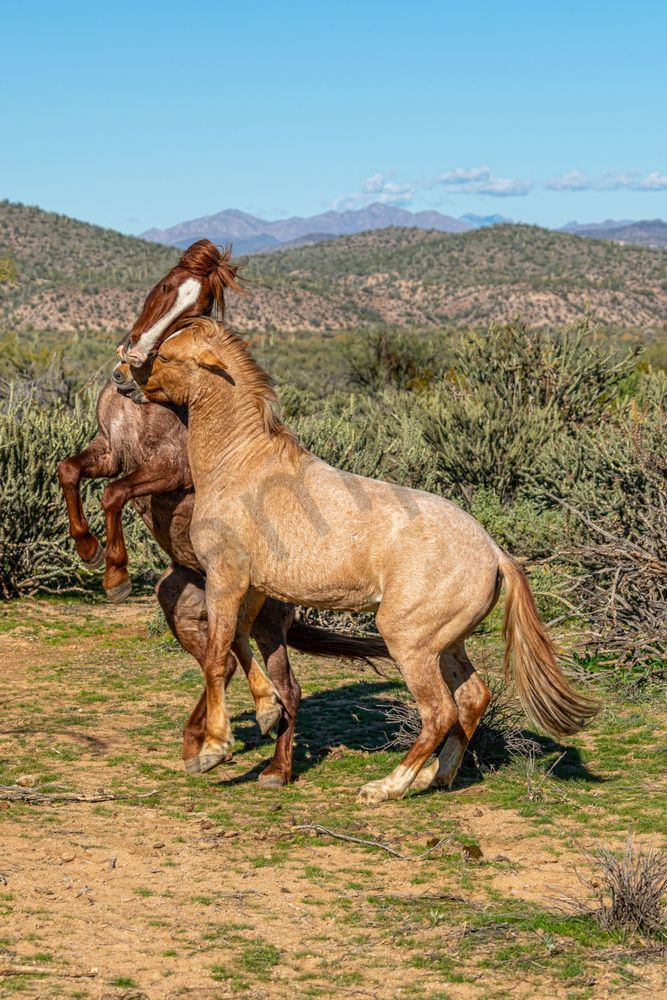
Play-fighting between young stallions is rehearsal, and it's how the whole social system gets built.
Colts begin sparring long before any of it matters. They rear, they push shoulder to shoulder, they grab at each other's necks and legs, and then they stop and graze as though nothing happened. Nobody gets hurt because nobody is trying to. What's being worked out is not who wins today but a slowly accumulating sense of who is stronger, who is quicker, and who backs off: information each horse will rely on years later when a real confrontation would be genuinely dangerous.
That's the function. A serious fight between mature band stallions can end in broken bones and permanent injury, and horses avoid them where they can. The avoidance depends on both animals having a reasonably accurate estimate of how it would go. Years of sparring like this is how they get it.
Young stallions who don't yet hold mares typically band together, and bachelor groups are where most of this happens. They are also, frankly, the most entertaining horses on the river. The adults tolerate them at a distance and get on with eating.
On printing this one: motion is the subject, so this is the image where print size buys the most, at small dimensions the tangle of legs reads as confusion rather than action. It also wants a surface with some contrast punch to keep the two bodies separate against the desert background. Metal, and larger than feels necessary.