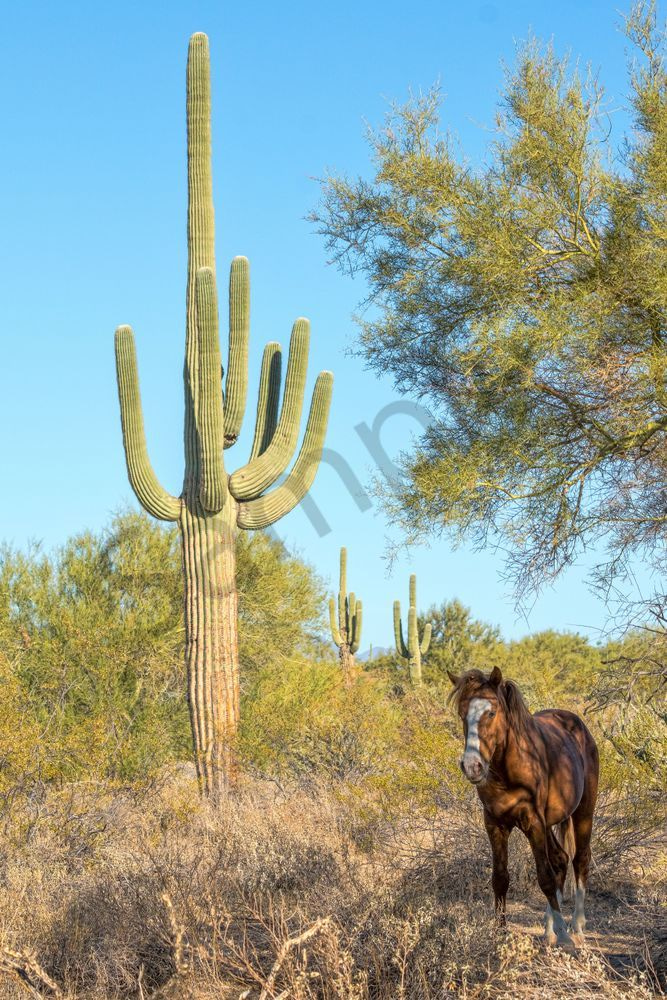
"Wild and free" is a phrase worth unpacking, because for this herd it was a genuinely open question within the last decade.
In 2015 the U.S. Forest Service issued notice to remove the horses along the Lower Salt River, classifying them as unauthorised livestock rather than protected wild horses. The distinction is legal rather than biological: the federal Wild Free-Roaming Horses and Burros Act of 1971 protects herds on designated federal range, and these horses were held not to qualify. Under that reading they could be gathered and sold.
The public response was immediate and very large: local and national, organised fast, and loud. The removal was suspended. In 2016 the Arizona Legislature passed the Salt River Horse Act, making it illegal to harass, kill or slaughter them and putting management under state authority rather than leaving their status unresolved. A formal agreement followed with the Salt River Wild Horse Management Group, the volunteer organisation that had been documenting the herd for years and now handles day-to-day stewardship: including humane fertility control, delivered by dart, which limits population growth without removing a single animal.
So these horses are free in the desert outside Phoenix because a lot of people refused to let them be trucked away, and because a workable alternative to removal was put in place. That context is, I think, part of what people respond to in the photographs.
On printing this one: a lone stallion against open desert is a composition about isolation, and isolation needs negative space to work. Resist the urge to fill the wall. This one is better slightly smaller with generous matting than enormous and edge-to-edge.