Riparian habitat makes up a vanishingly small fraction of Arizona's land area and supports a wildly disproportionate share of its wildlife. The general figure quoted for the arid Southwest is that well under five percent of the landscape is riparian, and that the majority of the region's vertebrate species depend on it at some point in their lives. In a desert, everything is organised around water, and the green ribbon along a river is where that organisation becomes visible.
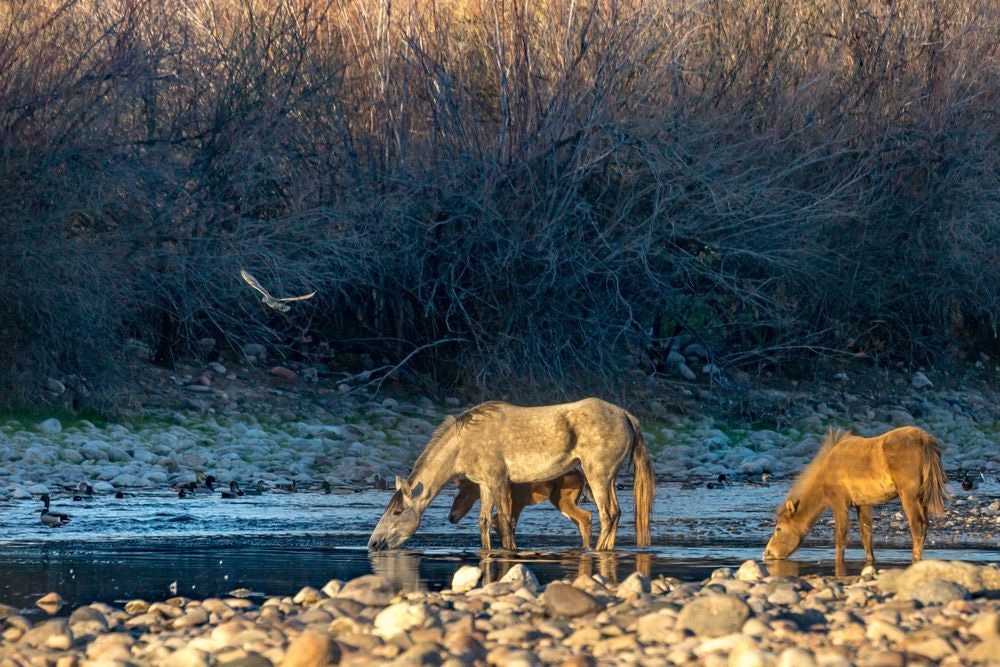
Which is what this photograph is actually about. The horses are the largest thing in it, but they're one line in a longer list: waterfowl on the surface, shorebirds working the margin, herons and egrets in the shallows, ospreys and bald eagles overhead, raccoons and otters working the banks. Cottonwood and willow hold the bank together and shade the water enough to keep it habitable. Remove any one layer and the rest destabilises.
There's a foal in this frame, and that's the detail I'd point to. A foal means the band found enough forage and enough water through a summer to support a pregnant mare, and enough safety to keep a newborn alive in the open. It's the clearest single indicator that this stretch of river is working as habitat rather than merely looking like it.
On printing this one: this is the one image here that hangs as a landscape rather than as wildlife. The late sun on the water is the subject and the horses are the incident, which means it will work in rooms where a stallion portrait would be too much. Metallic or pearl paper suits the reflected light better than glossy metal, which can push the warm tones toward orange.