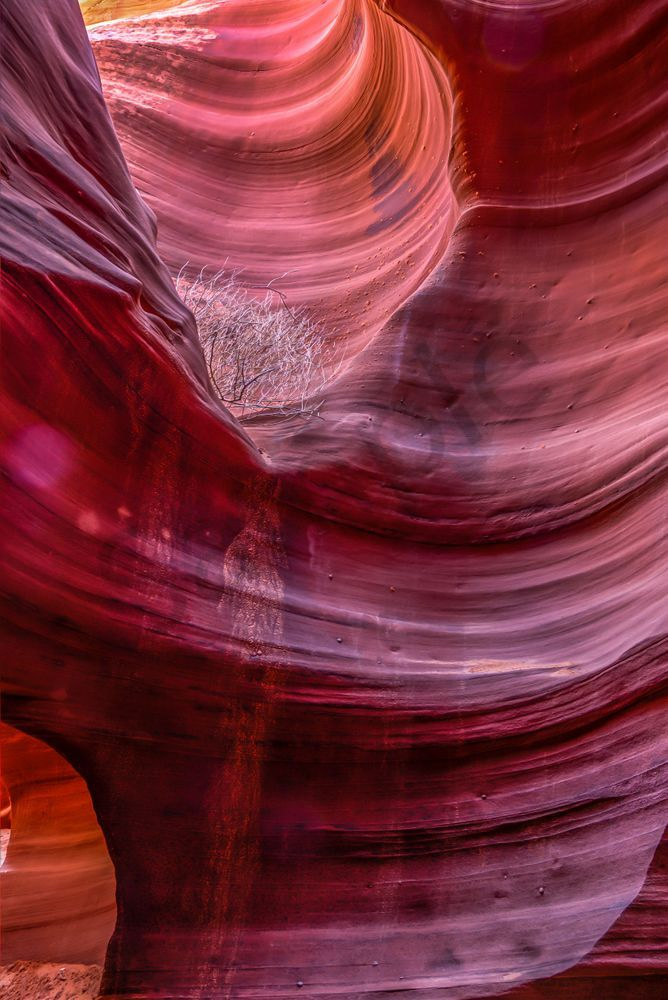
The colour here is real, and it is iron.
Sandstone is quartz grains, and quartz is colourless. What tints it is a thin coating of iron oxide on the surface of the grains, and small changes in the amount and the chemical state of that iron produce the enormous colour range these canyons show: yellows and creams where there is little of it, oranges and reds where there is more, and the deep magentas in this frame where reflected light is bouncing repeatedly through the reddest rock in the passage.
Which is why the same stretch of wall is a different colour at different hours. The pigment does not change. The number of bounces the light makes before it reaches the wall does, and every bounce pushes it further toward red. Photograph this section at ten in the morning and it is a dusty pink; come back after noon and it can be close to crimson.
The small dry bush wedged into the wall is doing more work than it appears to. It is the only thing in the frame that is not rock, the only clue to scale, and a reminder that the canyon floods: it did not grow there, it was carried there and left behind when the water dropped.