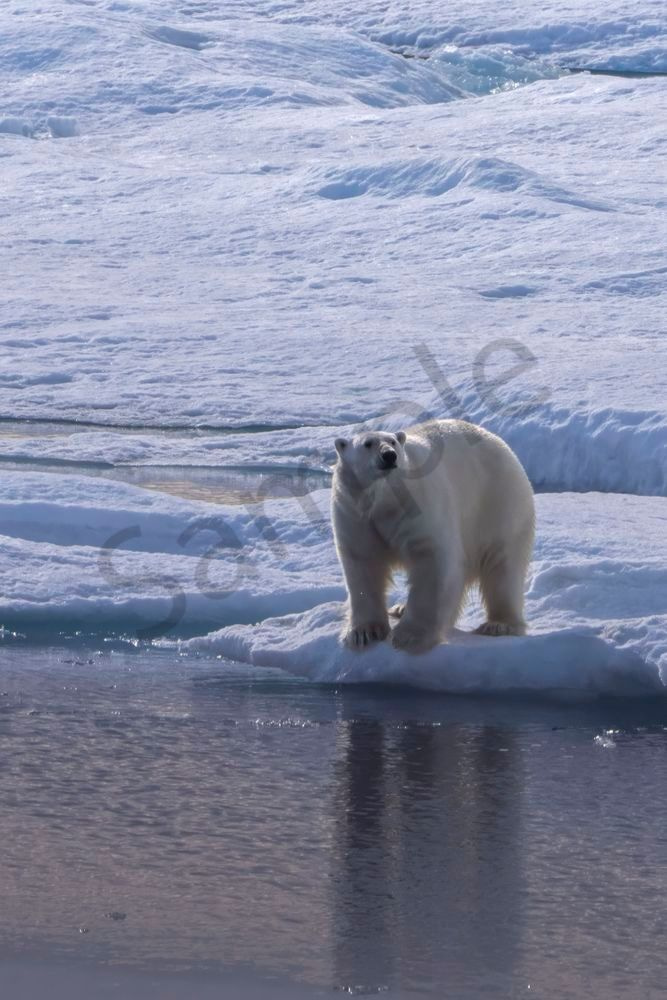
Adventure Canada runs its expeditions as a floating research community as much as a cruise. Passengers were enrolled in an iNaturalist project for the voyage and asked to photograph anything of interest: the biologists on board called it "many eyes across the landscape," and they meant it literally, from polar bears down to the polar bumblebee. A sighting like this one is a data point before it is a print.
That framing changed how I photographed the trip. When a bear appears, the reflex is to fill the frame. But the wider picture, the extent of the ice, the condition of the animal, the season, is the part that carries information. This bear was in visibly good condition, which is worth recording in a region where that is no longer guaranteed.
The ice off the Cumberland Peninsula in August is a mosaic rather than a sheet: broken pans of varying age and thickness, some of it multi-year ice that has survived a summer or more, much of it thin and going. Bears read that mosaic constantly. The routes they pick across it look wandering and are not.
On printing this one: this is a white-on-white problem. A cream bear on grey-white ice under a bright sky gives the print almost no tonal room, and weak reproduction turns the whole thing to paste. Metal separates those near-identical whites better than anything else I have tried.