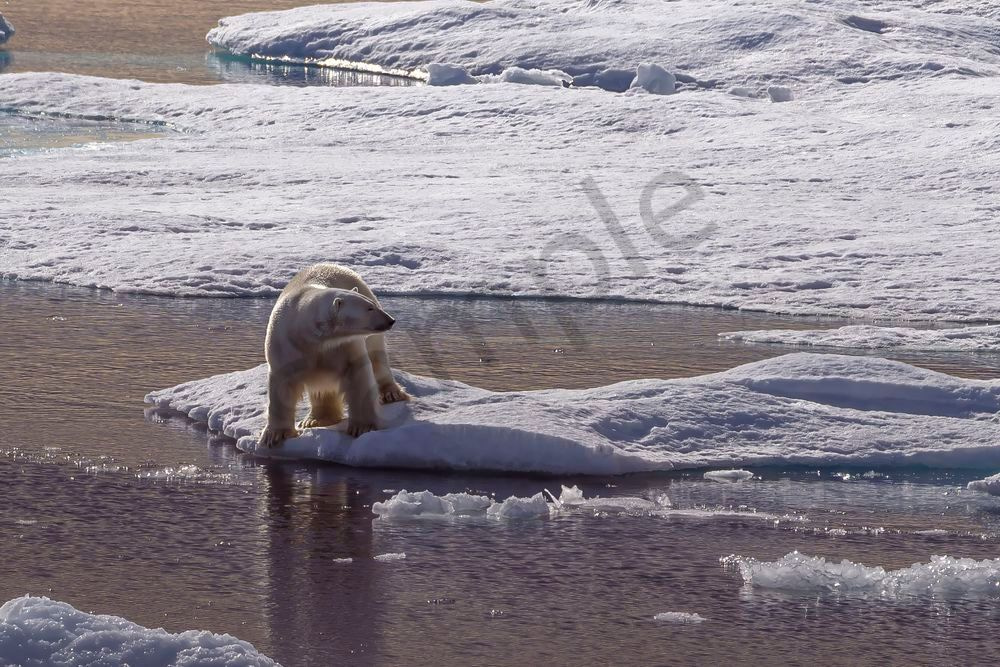
The pause is the picture. A bear about to enter the water gathers itself first, head down, weight shifting forward, reading the gap, and that half-second of hesitation is the only stillness you get in an encounter that is otherwise all motion.
Cumberland Sound, where this was taken, has been a working seascape for a very long time. It holds Kekerten, a historic whaling station that the Dutch and later the Scottish fleets used once they had exhausted the whale stocks around Svalbard by 1719 and moved west. From about 1820 onward there were more than 2,300 whaling voyages into the Baffin Island region. The bears were here through all of it, and are here now that the ships come carrying cameras instead of harpoons.
A note on what you are not seeing: about ninety percent of the ice in any floe sits below the waterline, and floes rotate unpredictably as they melt. A bear crossing broken ice is making a series of judgements about which platforms will hold, which is part of why they move the way they do, testing rather than charging.
Our expedition operated under strict guidelines from AECO, the Association of Arctic Expedition Cruise Operators, covering distance, approach and the wildlife's right of way. No photograph is worth altering an animal's behaviour, and every frame in this gallery was made from a respectful distance.
On printing this one: the wet fur is the detail that sells it. The water still running off him catches light in a way that flattens out on matte surfaces. Metal holds those highlights. If you go with paper, glossy or metallic will keep the sheen that matte will quietly lose.