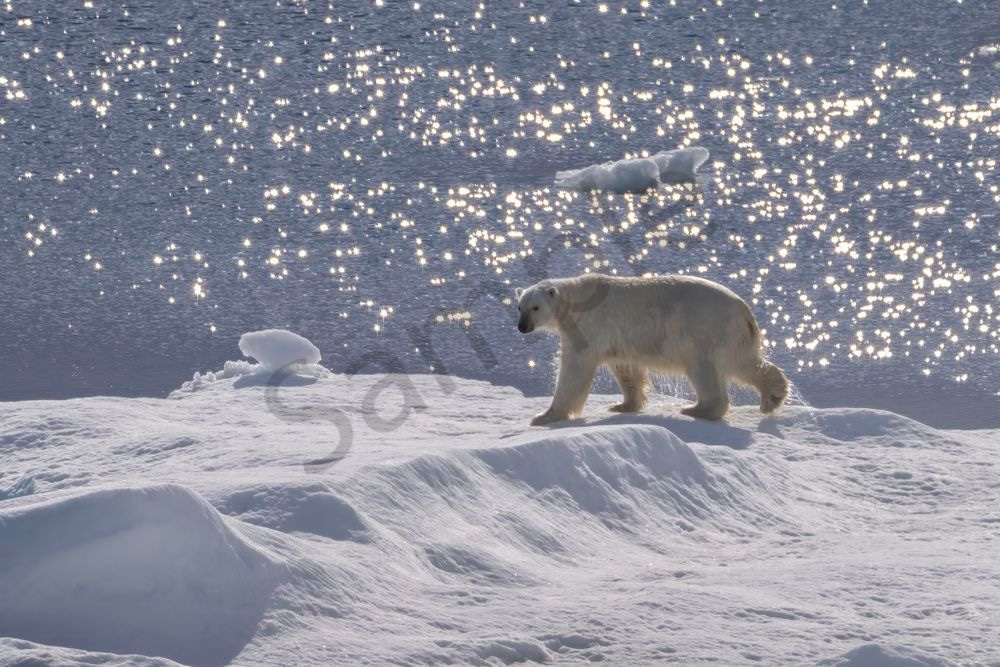
Photographing a bear from a moving ship is a problem of seconds, not minutes. The Ocean Endeavour keeps moving, the floe keeps turning, and the animal does not wait for you to change your settings. What you are looking at here is the small fraction of a longer encounter where the light, the angle and the bear's attention all lined up at once.
The sea ice in this frame is not scenery. It is the hunting platform. Polar bears take seals at breathing holes and at the edges of floes, which is why a bear in open water is usually a bear in transit and a bear on ice is a bear at work. Shrinking multi-year ice is the reason the species is under pressure: less ice means longer swims, fewer successful hunts, and less time to build the fat reserves that carry a bear through the lean season.
Everything we did ashore in this region was shaped by bears. Landings were run as "perimeter" operations: a marked boundary with armed bear guards in high-visibility vests posted around it, guests required to stay inside, and a standing instruction not to distract the guards, who need their full attention on the landscape. Before we were allowed ashore we watched a Parks Canada video on how to behave in a bear encounter. You do not travel casually in a place where you are not the top predator.
On printing this one: the bear is deliberately small in the frame, because the emptiness around him is the subject. That only works at size: printed small it reads as a distant animal rather than as scale. Go as large as your wall allows, and hang it where you can stand close to it.