The floor you are standing on is temporary.
Sand in a slot canyon is not a permanent surface. It is whatever the last flood happened to leave, and the next one will take some of it away and drop more somewhere else. The level rises and falls by feet, not inches, between seasons. People who photograph these canyons regularly will tell you that a composition they framed one year was unreachable the next, because the floor had dropped and the ledge they stood on was suddenly over their heads.
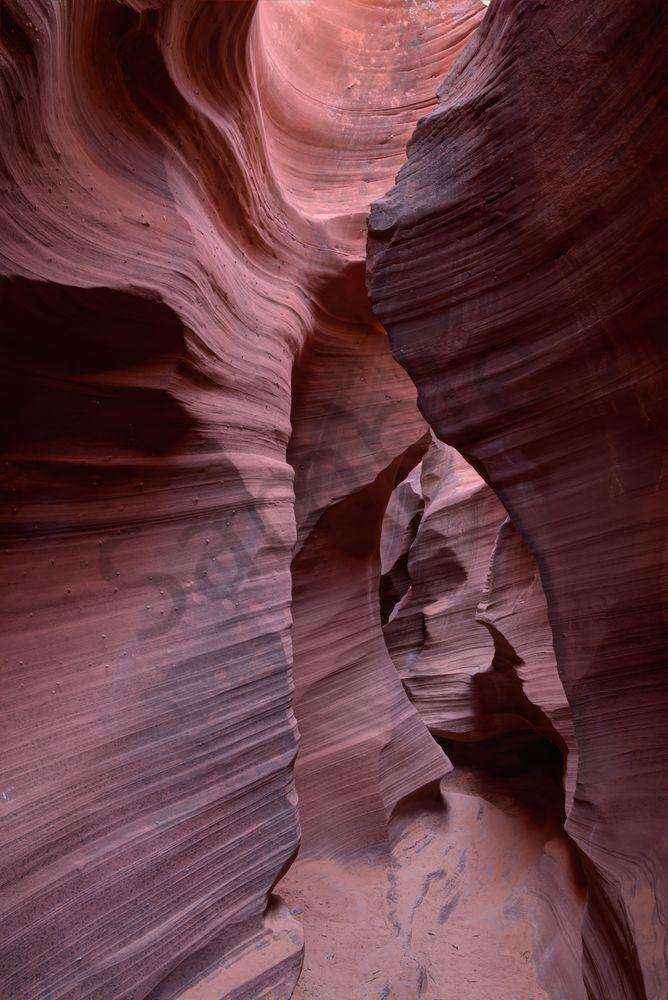
Which makes the footprints in this frame the most fleeting thing in a place otherwise made entirely of slow time. The walls took hundreds of thousands of years. The prints will last until the next serious rain.
The bend is what gives the photograph its title and its pull. You cannot see where the passage goes, and there is no way to find out except to walk it. That is the honest experience of the canyon, which never shows you more than the next twenty feet, and it is why I framed this looking into the turn rather than through it.