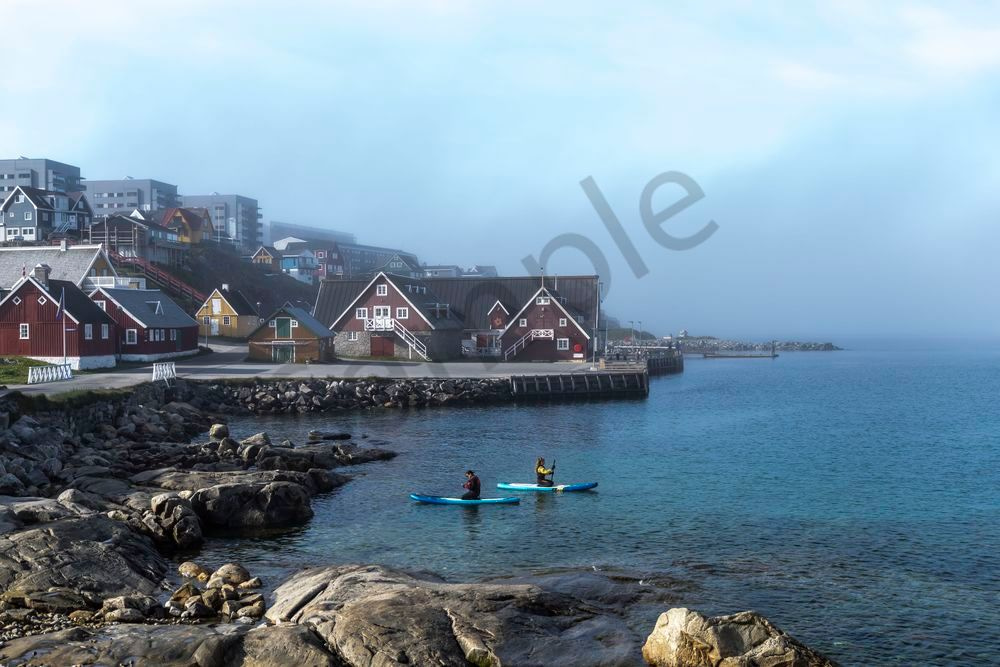
These are not tourists in rented boats. Greenlandic kayaking is a competitive discipline with clubs, coaching and a national championship, and what you are watching here is training.
The qajaq is Inuit technology, skin stretched over a driftwood or bone frame, built to the individual paddler's measurements and used for hunting in water that will kill an unprotected person in minutes. Because a capsize far from shore was fatal, paddlers developed an extensive repertoire of rolls: dozens of named recoveries, including rolls performed with a harpoon, with one arm, or with no paddle at all. These were survival techniques first and became a competitive art form second.
That knowledge nearly disappeared. Colonisation, imported boats and the decline of kayak hunting broke the chain of transmission in many communities, and the revival now under way, through clubs, youth programmes and the annual national championship, is deliberate cultural work as much as sport. The young people in this photograph are doing something their great-grandparents did, that their grandparents may not have been taught.
The fog is not incidental either. Paddling in it is normal here, and navigating by sound and coastline is part of the skill set.
On printing this one: fog compresses everything toward the middle of the tonal range, and the deep blues of the boats are the only anchor in the frame. Those blues need a surface that can hold depth. Metal, or a metallic paper if you are hanging it somewhere with difficult reflections.