We got a proper lesson on this bird at sea, and it changed how I watched them.
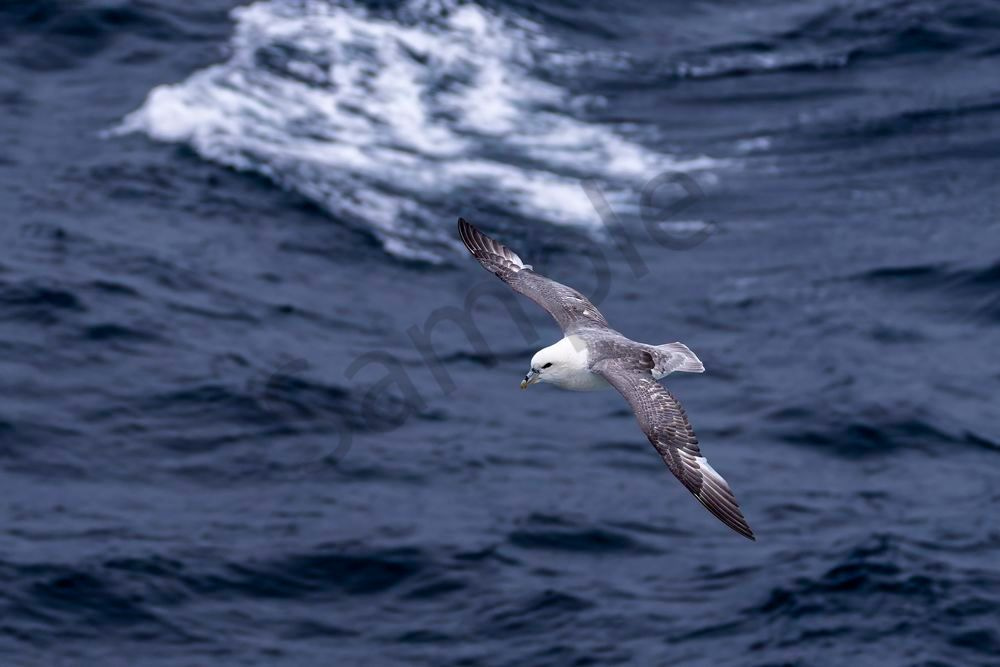
A fulmar's wing is not a single surface but an organised assembly. The long primaries at the wingtip generate thrust and handle the fine control; the secondaries closer to the body provide lift; and there is a small separate tuft at the leading edge called the alula which works precisely like the slat on an aircraft wing, keeping airflow attached at low speed and delaying the stall. Once somebody points out the alula you cannot stop seeing it deploy.
That anatomy is why a fulmar flies the way it does. It holds its wings stiff and straight, takes a few shallow beats, and then glides: extracting energy from the tiny updraughts thrown off the face of every ocean swell. Over a long day at sea this costs a fraction of what flapping flight would. It is why they can follow a ship for hours without apparent effort, and why they seem to be doing nothing at all while covering enormous distances.
They are tubenoses, related to the albatrosses and petrels, and the prominent tubes on the bill house a salt gland that lets them drink seawater, along with an exceptional sense of smell for finding food across empty ocean.
On printing this one: a bird against sea and sky is mostly negative space, which means it hangs comfortably in places a busier image would crowd, a hallway, a stairwell, above a desk. Pearl paper suits the soft greys of the plumage. If you order paper, include a mat and frame up front; custom framing later is significantly more expensive.