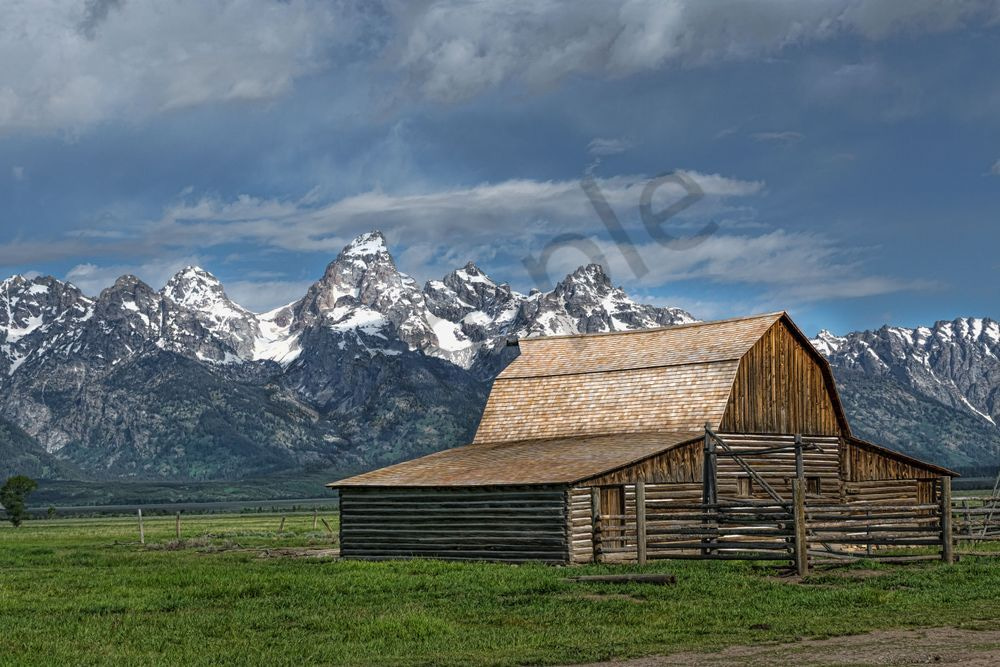
What made this settlement possible was not the soil. It was the water rights.
The homesteaders here dug irrigation ditches from Ditch Creek and the Gros Ventre, and those ditches are the reason a row of farms could exist on a valley floor that is otherwise sagebrush. Digging and maintaining them was more work than any single family could manage, which is the practical reason the houses were built close together rather than spread across the claims. Community here was infrastructure, not sentiment.
The end came from an unexpected direction. Through the 1920s and 1930s, land in Jackson Hole was quietly bought up and eventually folded into what became Grand Teton National Park. Some families sold, some held out for decades, and the arguments about it were bitter and went on for years. The buildings you are looking at survived because the park preserved them, which means the same process that ended the farming is the reason there is anything left to photograph.