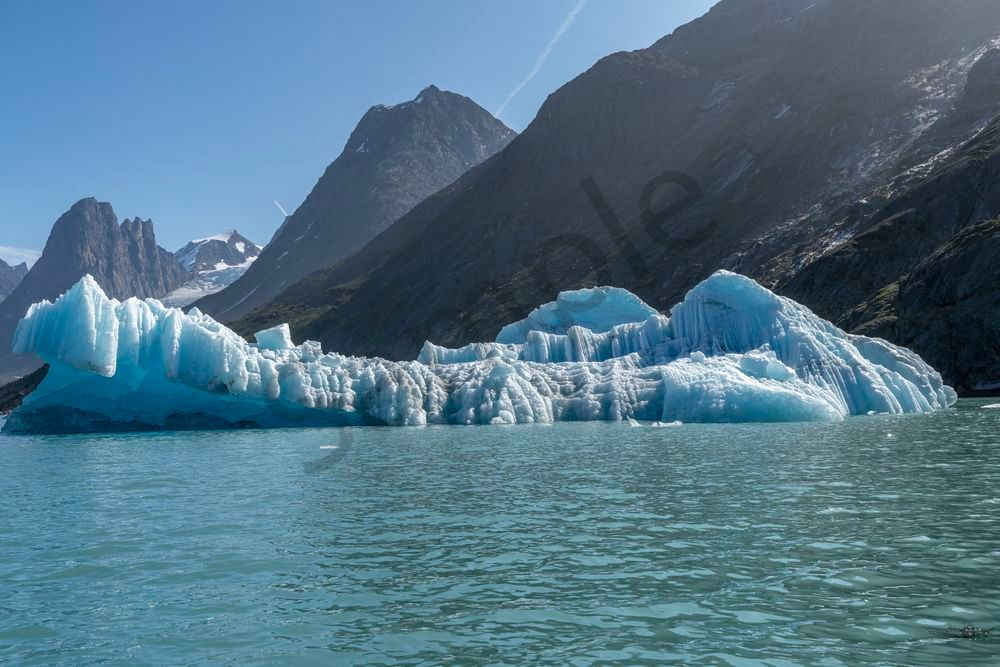
The second of two studies from the same fjord, and the one I keep coming back to for its edges. Where the previous frame is about mass, this one is about line: the way a melting berg develops undercuts and overhangs at the waterline as warmer water works at it faster than the air does above.
That waterline notch is a reliable tell. A berg with a deep cut around its middle has been sitting in one attitude long enough for the sea to carve it, which means it is approaching the point where it will roll. Ships give bergs a wide berth for exactly this reason, and so do the zodiacs: an apparently stable piece of ice can turn over without warning, and the displaced water goes somewhere.
About ninety percent of any iceberg sits below the surface, so the visible shape is the small end of a much larger and entirely invisible object. What is above water is also the part being sculpted by sun and wind rather than by current, which is why the top and the bottom of a rolled berg look like they came from different worlds.
Fun fact: in some conditions you can hear icebergs. As compressed air escapes from ancient bubbles opening at the surface, a large berg produces a faint, continuous crackle that the whalers reportedly called "bergy seltzer."
On printing this one: this frame is about edge and line rather than colour, which makes it the rare iceberg image that looks better on paper than on metal. A textured fine art paper suits the sculptural quality. Pair it with the other Kangerlussuaqsiaq berg if you want the contrast between mass and outline.