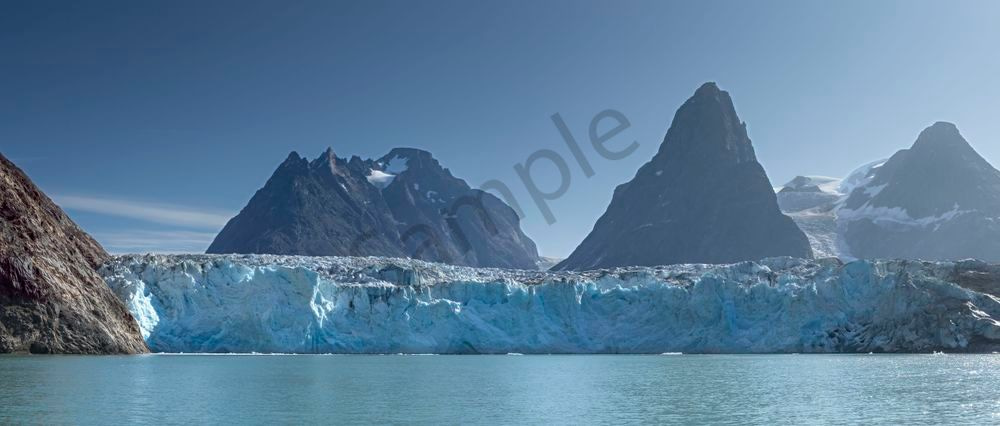
This is a panorama because nothing else would have worked. A single frame at any focal length either lost the glacier at the head of the fjord or lost the walls that give it context, and the relationship between the two is the whole subject: the ice sheet finding a channel and grinding its way down it.
A glacier behaves like a bulldozer. As it advances it pushes a berm of rock and debris ahead of and beneath itself, called a moraine. Where the ice later retreats and sea level rises, those moraines end up submerged, forming underwater sills across fjord mouths. That single piece of geology explains an enormous amount about how Greenland's coast looks and how its icebergs behave.
The icebergs visible in a fjord like this one have calved from the glacier at its head, some of them recently. They will drift seaward, ground out, turn over, refloat, and eventually join the general southward traffic into the North Atlantic. Some of the ice in them fell as snow before the pyramids were built.
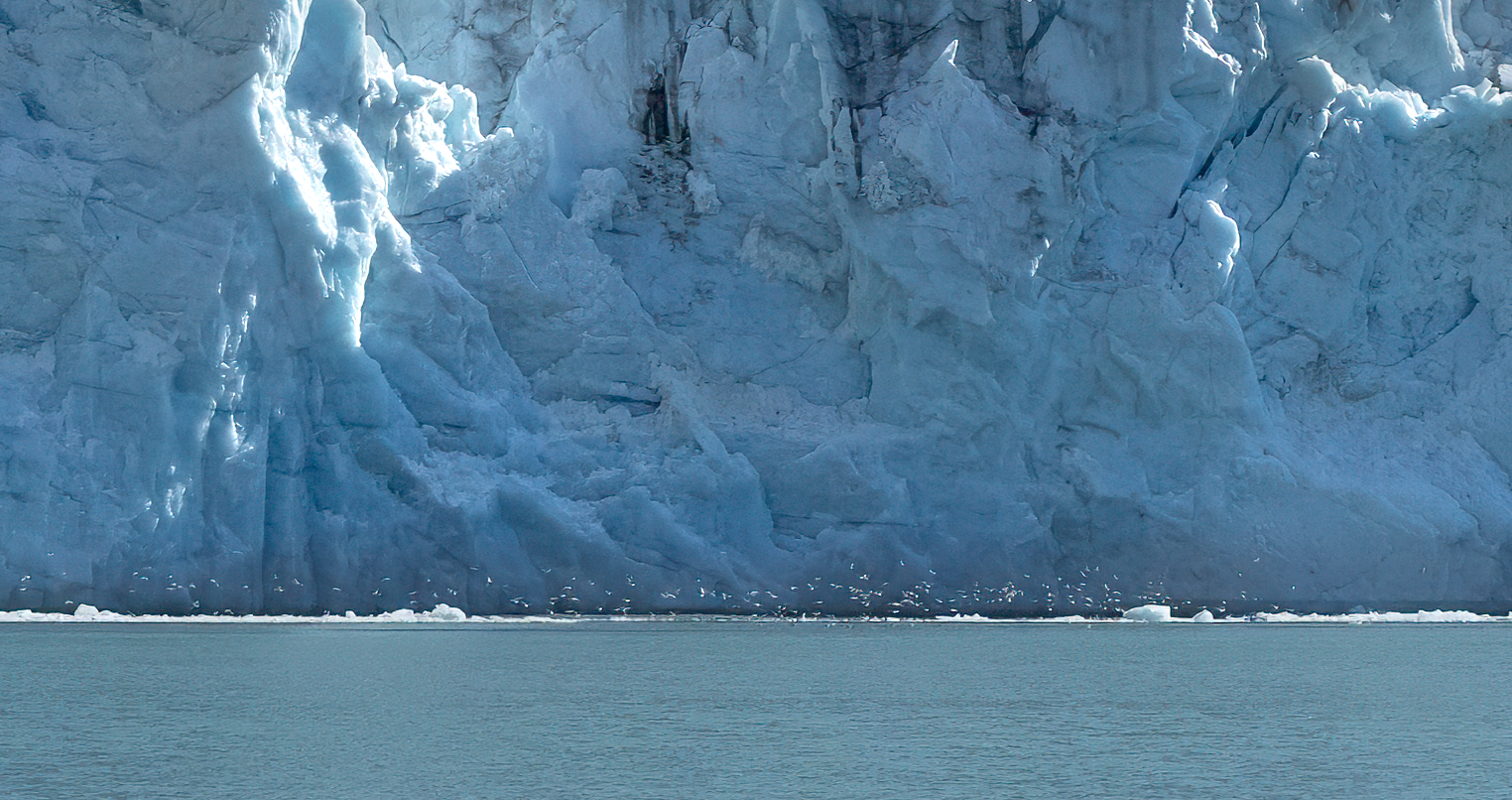
Technically: the file behind this print is very high resolution, and it rewards size. At small dimensions it reads as a pretty landscape. Printed large, you start to see the texture of the ice front, the meltwater staining, and the individual bergs that are otherwise just white specks.
On printing this one: of everything in this gallery, this is the file that most rewards going big. The panoramic proportion needs length to breathe, and the resolution holds up far past the point where most images fall apart. If you have a long wall, this is the image for it.