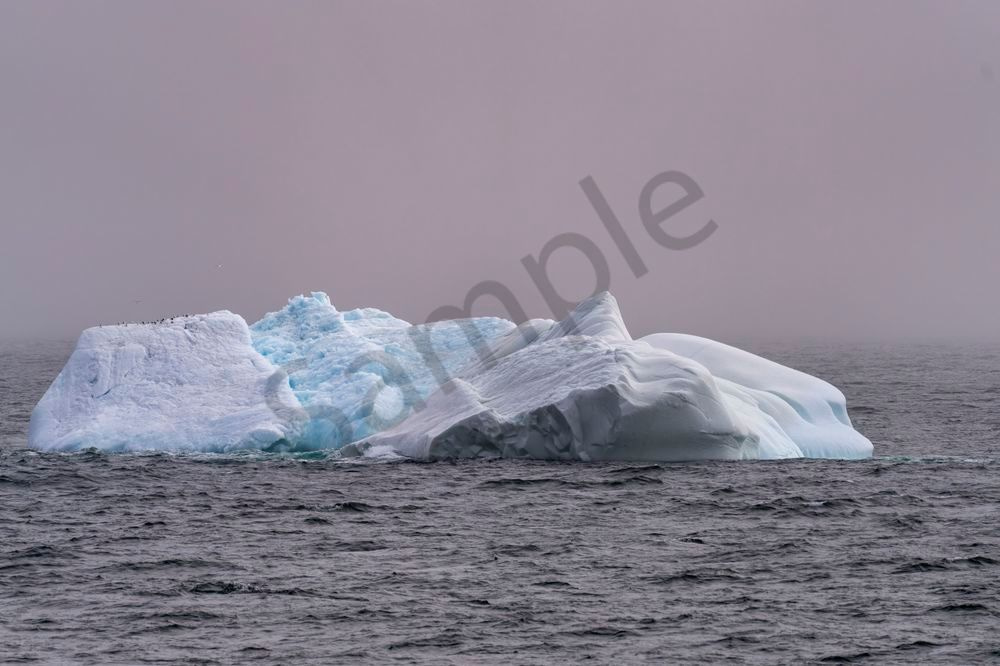
The birds change the photograph entirely, and not only because they give you scale.
Icebergs and floes function as habitat. For seabirds they are resting platforms in the middle of open water, which matters enormously for species that feed at sea and would otherwise have to stay airborne or return to a colony. Black-legged kittiwakes are small gulls that spend most of the year genuinely oceanic, coming to land mainly to breed on cliff ledges, and a berg is effectively a free island wherever they need one.
There is more to it than a perch. Melting ice releases freshwater and nutrients and creates local mixing at its edges, which concentrates plankton, which concentrates the fish and invertebrates that feed on plankton. A berg is a small, drifting, temporary ecosystem, and the birds riding on it are frequently there because the feeding is good directly underneath.
The blues in this frame are the giveaway to its history. That depth of colour means dense, old, compressed ice from far down in the sheet, and the distinct layering means the berg has capsized more than once: each roll exposing a face formed under different conditions.
Fun fact: kittiwakes are among the few gulls that essentially don't scavenge from people. They are open-ocean specialists, and a bird on this berg is far more at home than one in a harbour would be.
On printing this one: the birds are small, and they are the joke. People notice the berg first and the passengers second, which is the experience I want the print to give. That only works if the birds are resolved rather than suggested, so err larger than you think you need.