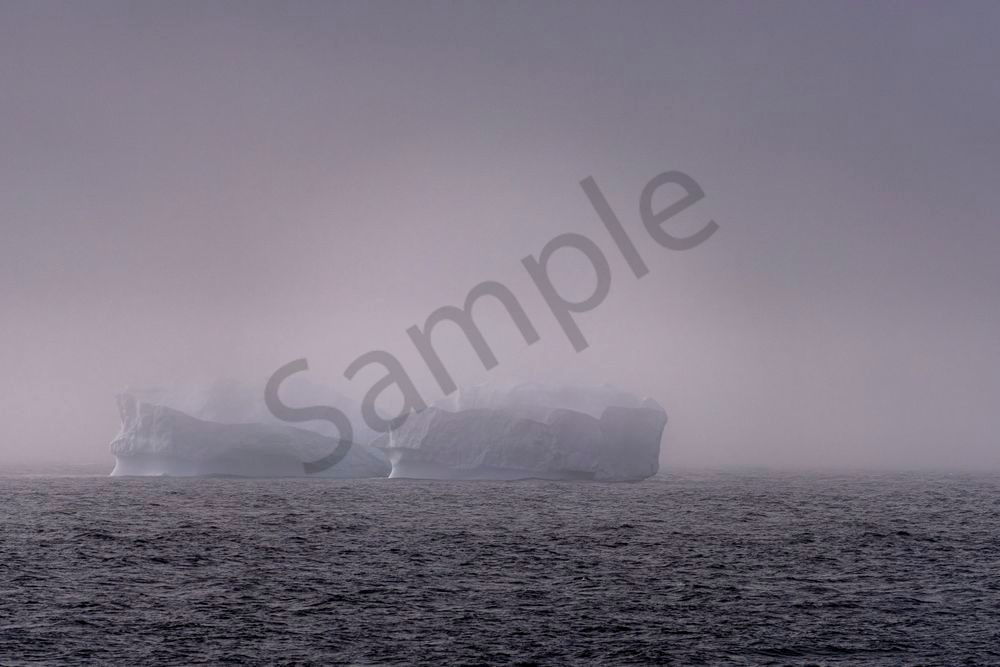
Fog is the Arctic's default summer weather far more often than the brochures suggest, and it is produced here by a specific mechanism: relatively warm, moist air moving over cold water and cold ice. Advection fog, formed rather than blown in. It can arrive in minutes, close visibility to a few hundred metres, and reshape an expedition's entire day: landings get cancelled on fog because bear-safety operations depend on being able to see.
For photography it does something no filter can. Fog is a physical low-pass filter on the world: it removes detail with distance, collapses tonal range, and drains colour, so a subject is reduced to shape and relative darkness. Everything that usually does the work in a landscape photograph, texture, depth cues, colour relationships, is simply gone, and what remains has to carry the frame by itself.
This is why I keep coming back to it. A berg in clear light is a spectacle and photographs itself. A berg in fog is only as good as the composition, and there is nowhere to hide.
On printing this one: I will argue against my usual advice here. Almost everything else in this gallery wants metal; this one does not. It is a near-monochrome study with almost no detail to reveal, and a glossy surface adds a hardness that works against it. Matte or pearl fine art paper, modestly sized, hung somewhere quiet.