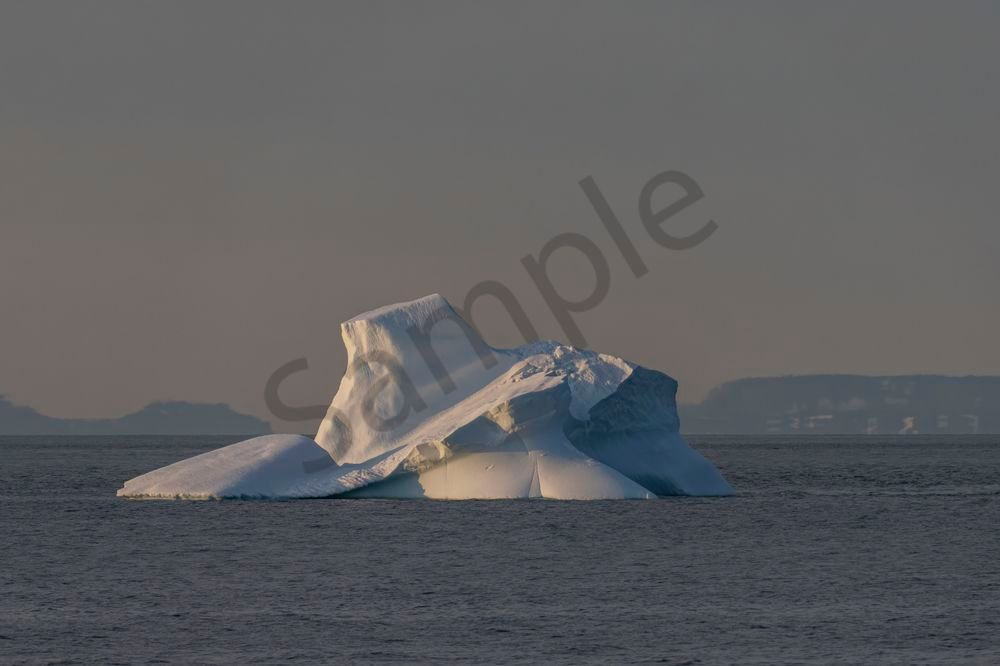
Eighteen words is all the Short Description on this one has ever had, so here is the rest of it.
Late light at high latitude behaves differently from late light at home. Because the sun sets at a shallow angle rather than dropping, the warm phase lasts far longer, and because the air over the Arctic ocean is exceptionally clean, very little dust, very little pollution, very little haze, the colour stays saturated instead of going milky. What you lose in atmospheric drama you gain in clarity.
Ice is an unusually good subject for that light because it is translucent rather than opaque. Light does not simply bounce off a berg; it enters, scatters through the crystal structure, and comes back out, which is why ice seems to glow from within at low sun angles rather than just reflecting. The denser and more bubble-free the ice, the deeper into it the light gets.
The texture in the surface is a melting record. Ridges, runnels and pitting are all water working on ice at different rates depending on density and exposure, and a berg that has rolled shows the smooth, scalloped signature of former underwater surfaces alongside the rougher wind-and-sun-carved faces.
On printing this one: the late light gives this frame unusually rich colour for an ice image, and it holds up on almost any surface, metal for intensity, pearl for subtlety. If you order it on paper, include a mat and frame with the order; framing it afterward costs a good deal more than doing it at the time.