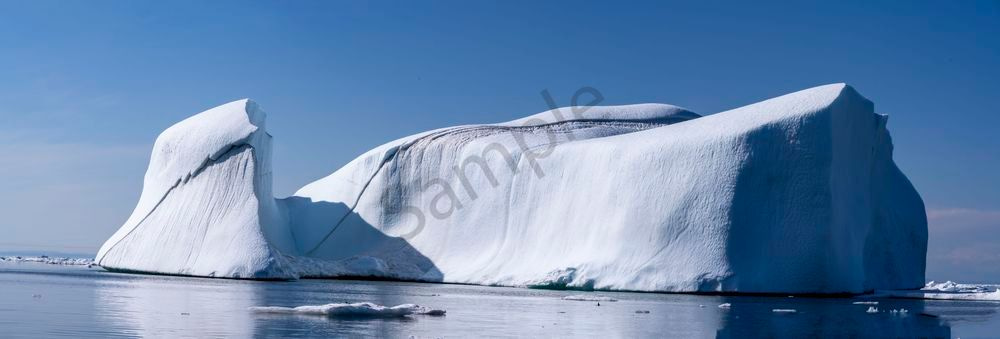
Scale in an iceberg photograph is almost impossible to convey, because the viewer has nothing to measure against and icebergs have no standard proportions. A berg can look identical at twenty metres and two hundred. This one was large enough that the ship altered its relationship to it in a way you could feel from the deck.
John Davis, who gave the strait its name, sailed these waters in the 1580s looking for the Northwest Passage. He did not find it. Nobody did for another three centuries, and the search consumed an extraordinary number of ships and lives: mostly because Europeans consistently declined to learn from the people who had been living there successfully for millennia.
What came instead was whaling. Once the Svalbard grounds were exhausted by 1719, Dutch whalers pushed west across the strait, and from about 1820 the fleets, increasingly Scottish, worked the Baffin Island side. More than 2,300 whaling voyages ran into this region over the following century. The stations they built, like Kekerten in Cumberland Sound, are archaeological sites now.
The bergs, meanwhile, have been doing the same thing the entire time: calving off Greenland, drifting south and west on the current, and melting into the North Atlantic. They are the only part of this story that has not changed.
On printing this one: the subject is size, so the print has to be big enough to make the argument. Everything about this image is working to convey mass, and a small print undoes all of it in a single decision. This is the one to over-buy on dimensions.