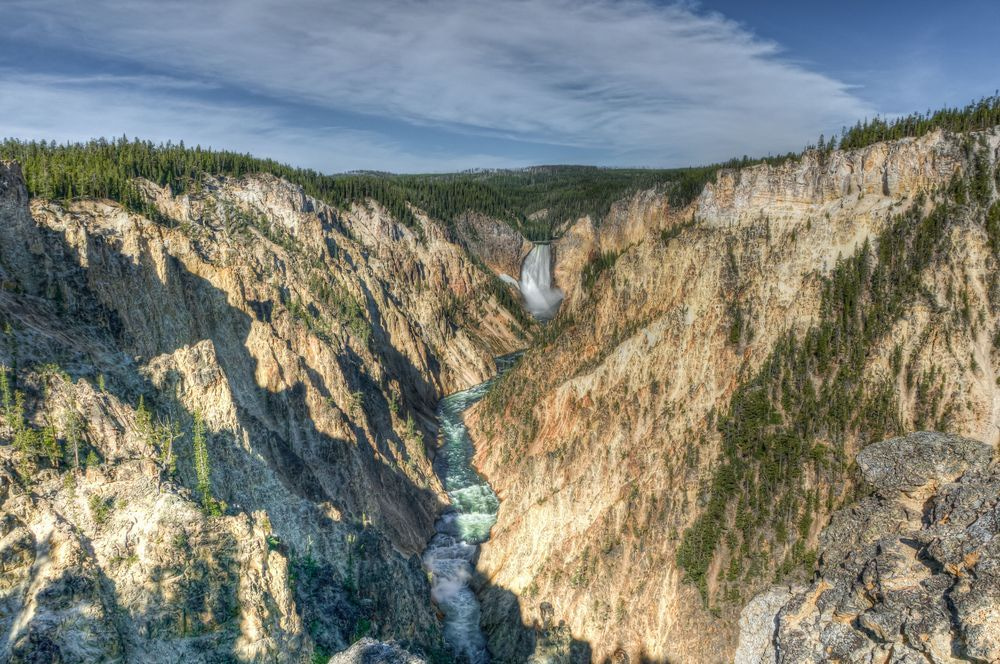
This canyon is young. Not young in the way geologists usually mean it, but young in a way a person can almost get their head around: the current canyon has been cut since the last glaciers left, which puts most of the work inside the last fourteen thousand years or so.
It could happen that fast because the rock had already been prepared. Hot water and steam rising through the rhyolite for a very long time chemically rotted it, converting hard volcanic rock into something closer to clay in places. When glacial meltwater arrived with real volume behind it, it was not carving fresh lava. It was flushing out rock that had already been taken apart from the inside.
That process has not stopped. The canyon walls are still hydrothermally active, still steaming in places, and still failing in rockfalls. Almost everything else in this collection is a photograph of something that changes on a timescale beyond human attention. This one is a photograph of something visibly in progress.